Japan is known for safe streets, clean cities and convenient daily life. But summer in Japan can be more dangerous than many newcomers expect.
The heat is not only about high temperature. Japan’s summer is often hot, humid and physically exhausting. For foreign residents, international students, workers, families, children and elderly people, heat illness can become a serious risk if they are not prepared.
Every year, Japan issues heat-related warnings and public safety information to help people avoid heatstroke. For newcomers, these alerts may be confusing at first, especially if they are written in Japanese or appear through weather apps, city office announcements, school notices or workplace messages.
This article explains what foreign residents should know about Japan’s summer heat, heatstroke alerts and basic safety actions.
Important Note Before You Read
This article is for general information only.
Weather conditions, heat alerts and local safety measures change by area and date. Always check the latest information from the Japan Meteorological Agency, the Ministry of the Environment, your local city or ward office, your school, your employer, or official emergency information sources.
If someone shows serious symptoms, do not wait. Call emergency services or seek medical help immediately.
1. Why Japan’s Summer Heat Feels So Difficult
Many foreigners are surprised by Japan’s summer.
Even if the temperature does not look extremely high compared with some countries, the humidity can make the body feel much hotter. Sweat does not evaporate easily in humid weather, so the body has difficulty cooling itself.
This can lead to heat illness.
Common situations where foreign residents may be at risk include:
- Walking outside during the afternoon
- Waiting at stations or bus stops
- Working outdoors
- Cycling or commuting
- Living in a room without enough air conditioning
- Sleeping in a hot room
- Doing sports or club activities
- Working in kitchens, factories, construction sites or delivery jobs
- Wearing formal clothes for school or work
- Not drinking enough water
- Not understanding Japanese heat warnings
Japan’s summer heat is not something to underestimate.
2. What Is Heatstroke?
Heatstroke is a serious condition caused by the body overheating.
It can happen when the body cannot control its temperature properly in a hot environment. It may happen outdoors, indoors, at work, at school, during sports, while walking, or even while resting in a hot room.
Heat illness can begin with mild symptoms, but it can become dangerous quickly.
Possible warning signs include:
- Dizziness
- Headache
- Nausea
- Heavy sweating
- Muscle cramps
- Tiredness
- Weakness
- Feeling unusually hot
- Confusion
- Difficulty speaking clearly
- Loss of consciousness
If the person becomes confused, cannot respond normally, stops sweating, has very high body temperature, or loses consciousness, it may be an emergency.
In that situation, call 119 for ambulance assistance.
3. What Is a Heat Stroke Alert in Japan?
Japan uses heat-related alerts to warn people when the risk of heat illness is high.
The Ministry of the Environment provides heat illness prevention information and uses the WBGT index, also known as the Wet Bulb Globe Temperature. This index considers not only temperature, but also humidity, sunlight and heat radiation.
A Heat Stroke Alert is announced when the WBGT index is expected to reach a dangerous level.
For foreign residents, the important point is simple:
When a heat alert is issued, daily activities should be adjusted.
This may mean:
- Avoid going outside during the hottest time
- Avoid unnecessary physical activity
- Use air conditioning
- Drink water regularly
- Check elderly family members or neighbors
- Avoid outdoor sports
- Be careful during commuting
- Follow school, workplace or city office instructions
Do not treat a heat alert as ordinary weather news. It is a safety warning.
4. What Is a Special Heat Stroke Alert?
Japan also uses stronger warnings during extremely dangerous heat conditions.
A Special Heat Stroke Alert may be issued when the heat risk is expected to become especially severe over a wide area.
When this happens, local governments may open cooling shelters or designated cooling spaces. These may include public facilities such as community centers, libraries, municipal buildings or other air-conditioned spaces.
Foreign residents should check their local city or ward office website for cooling shelter information during extreme heat.
If your room is too hot and you cannot cool it safely, going to an air-conditioned public place may be safer than staying indoors without cooling.
5. Who Is Most at Risk?
Anyone can suffer from heat illness, but some people face higher risk.
Higher-risk groups include:
- Children
- Elderly people
- Pregnant women
- People with health conditions
- People working outdoors
- Factory, kitchen, construction and delivery workers
- Students doing sports or club activities
- People who are not used to Japan’s humid summer
- People living alone
- People without air conditioning
- People who try to save electricity by not using cooling
- People who do not understand Japanese safety warnings
Foreign residents should be especially careful during their first summer in Japan.
The body may need time to adjust, and newcomers may not know how Japanese summer warnings, city announcements or workplace safety rules work.
6. Who Is Most at Risk?
Many people think heatstroke only happens outside.
That is not true.
In Japan, heat illness can also happen indoors, especially in rooms without proper air conditioning or ventilation.
Be careful if:
- Your room feels hot even at night
- You wake up sweating heavily
- You feel dizzy inside your room
- You avoid using air conditioning because of electricity cost
- You sleep without cooling during a heatwave
- You live on an upper floor that becomes very hot
- Your apartment receives strong sunlight during the day
Using air conditioning during dangerous heat is not luxury. It can be a safety measure.
If electricity cost is a concern, use cooling wisely, but do not put your health at risk.
7. Practical Heat Safety Rules for Foreign Residents
During hot days in Japan, follow these basic rules:
- Drink water before you feel thirsty
- Use air conditioning when needed
- Avoid outdoor activity during peak heat
- Wear light and breathable clothing
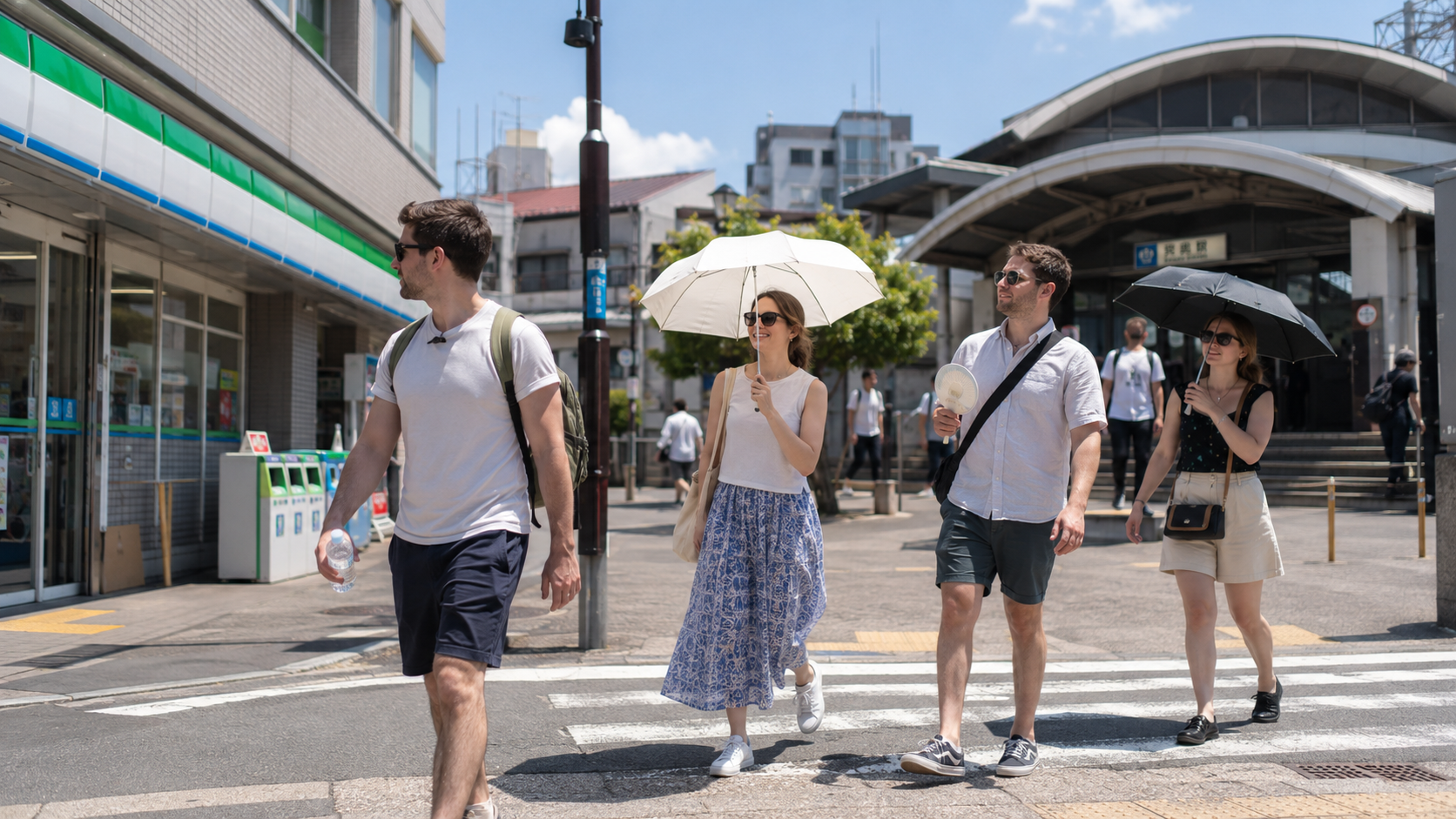
- Use a hat, umbrella or sunshade outside
- Take breaks in shaded or air-conditioned places
- Use convenience stores, stations or public facilities for cooling breaks
- Avoid intense exercise during heat alerts
- Eat properly and rest enough
- Check weather and heat alerts daily
- Carry a water bottle
- Do not ignore dizziness or nausea
- Check children, elderly people and family members
A simple rule:
If your body feels strange in the heat, stop and cool down immediately.
8. For Students in Japan
International students should be careful during summer.
Common student risks include:
- Walking long distances to campus
- Part-time jobs in hot workplaces
- Club activities or sports
- Living in small apartments without enough cooling
- Trying to save money by avoiding air conditioning
- Not eating properly during busy schedules
- Working late and not sleeping enough
Students should check announcements from their school, language school, university or dormitory.
If you feel sick during class, work or commuting, do not be embarrassed to ask for help.
9. For Workers in Japan
Foreign workers should be careful if their job involves physical activity, outdoor work, delivery, factory work, kitchens, cleaning, caregiving or construction.
Work-related heat risk can become serious because people may continue working even when they feel unwell.
Workers should pay attention to:
- Break time
- Water and salt intake
- Workplace temperature
- Uniforms or protective clothing
- Physical condition before work
- Dizziness or weakness during work
- Supervisor instructions
- Heat safety rules at the workplace
If you feel unwell, report it early.
Do not wait until you collapse.
10. For Families and Children
Families with children should be extra careful.
Children may not clearly explain that they are overheating. Babies and young children are especially sensitive to heat.
Parents should check:
- Room temperature
- Child’s sweating
- Water intake
- Outdoor playtime
- Car temperature
- Stroller heat from road surfaces
- School or nursery announcements
- Heat alerts before going outside
Never leave children inside a parked car, even for a short time.
In summer, car interiors can become dangerous very quickly.
11. What to Do If Someone May Have Heatstroke
If someone seems affected by heat, take action quickly.
Basic steps:
- Move the person to a cool or shaded place
- Use air conditioning if possible
- Loosen tight clothing
- Cool the neck, armpits and groin area
- Give water or oral rehydration drink if the person is conscious
- Do not force an unconscious or confused person to drink
- Call 119 if symptoms are serious
- Stay with the person until help arrives
Call emergency services if the person:
- Loses consciousness
- Is confused
- Cannot speak clearly
- Cannot drink water
- Has repeated vomiting
- Has severe weakness
- Does not improve after cooling
- Has very high body temperature
In Japan, the emergency number for ambulance and fire is 119.
12. Useful Places to Cool Down
During extreme heat, foreign residents should know where they can cool down.
Possible cooling places include:
- Home with air conditioning
- Convenience stores
- Shopping malls
- Public libraries
- Community centers
- City office buildings
- Train stations
- Large department stores
- Public cooling shelters, if opened by the city
Your local city or ward office may announce cooling shelters during dangerous heat.
Search your city name plus “cooling shelter,” “cooling share,” “heatstroke,” or “熱中症” for local information.
13. Check Official Information Regularly
During summer, foreign residents should check official information regularly.
Useful sources include:
- Japan Meteorological Agency
- Ministry of the Environment Heat Illness Prevention Information
- Ministry of Health, Labour and Welfare
- Local city or ward office websites
- School or employer announcements
- Disaster and weather apps
- Local government social media accounts
If you do not understand Japanese, use translation tools, multilingual websites or ask your school, employer or city office.
Do not depend only on social media rumors.
14. Common Mistakes to Avoid
Avoid these mistakes during Japanese summer:
- Thinking indoor heat is safe
- Waiting until you feel thirsty to drink water
- Ignoring weather and heat alerts
- Walking outside for too long during peak heat
- Avoiding air conditioning completely
- Doing outdoor sports during dangerous heat
- Not checking elderly family members
- Wearing heavy clothes unnecessarily
- Continuing work while feeling dizzy
- Leaving children or pets in a parked car
- Not calling emergency services when symptoms are serious
Heat illness can become serious quickly. Early action matters.
15. Simple Daily Checklist During Heat Alerts
Use this checklist during hot days:
- Did I check today’s weather and heat alert?
- Do I have water with me?
- Am I avoiding unnecessary outdoor activity?
- Is my room cool enough?
- Did I eat properly?
- Did I sleep enough?
- Do I know where to cool down?
- Did I check children or elderly family members?
- Do I know when to call 119?
- Did I reduce physical activity during peak heat?
This simple checklist can protect your health during Japan’s summer.
Final Thoughts
Japan is a comfortable and convenient country in many ways, but summer heat can be serious.
For foreign residents, the first step is awareness.
Do not wait until you feel very sick. Check heat alerts, drink water, use air conditioning, avoid unnecessary outdoor activity and take rest before your body reaches its limit.
Japan’s heat alerts are not just weather information. They are public safety warnings.
If you are a student, worker, parent, dependent, newcomer or long-term resident, take summer heat seriously.
AIC Japan will continue to explain important Japan news and daily-life information in a simple and practical way so foreign residents can live more safely and confidently.
AIC Japan
Reliable Japan Information
Sources
Official information should always be confirmed through the relevant authorities, including:
- Japan Meteorological Agency
- Ministry of the Environment Heat Illness Prevention Information
- Ministry of Health, Labour and Welfare
- Local city and ward office announcements
This article is for general guidance only. Heat alerts, weather conditions and local safety information change by area and date. Always check the latest official information.